Image
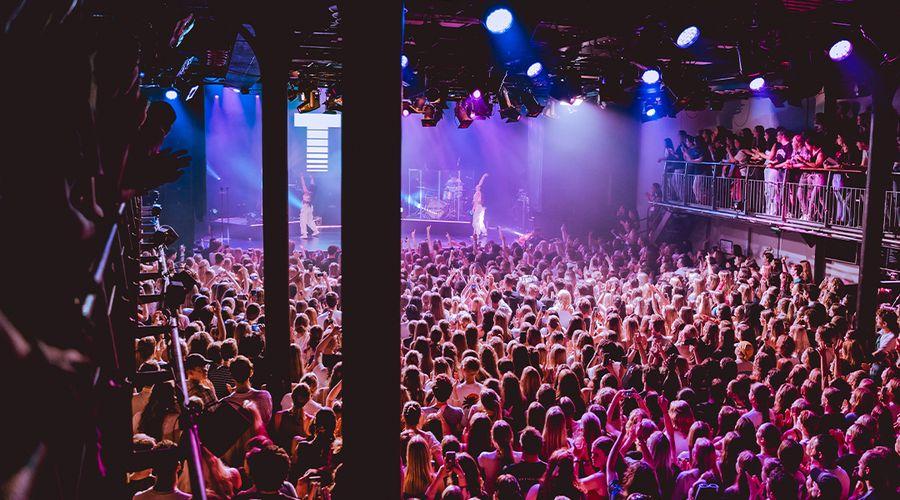
Working in nightlife means long nights, blurred boundaries, emotional labour, and constant interaction with audiences who may be under pressure themselves. At Amsterdam’s iconic venue Melkweg, mental health is approached not as an isolated issue, but as something deeply connected to diversity, inclusion, working culture, and safety. We spoke with Sherif El Safoury (Diversity and Inclusion Coordinator at Melkweg) about how internal policies translate into everyday wellbeing for staff, and what challenges remain in the nightlife sector.
Melkweg has long been active around Diversity, Equity and Inclusion. How does this translate through a clear policy?
In the Netherlands, cultural venues that receive public funding are required to have a diversity and inclusion policy. This is actually a very positive starting point, because it pushes venues to take these topics seriously and to allocate time and resources to them.
But a policy is never “finished”. Diversity and inclusion are a continuous process. The Dutch framework covers areas for venues to define concrete actions: programming, personnel, audience and partners. For Melkweg, programming is straightforward: We have always worked with a very diverse programme, and that naturally attracts a diverse audience as well. The bigger challenge is personnel. Even in a city as diverse as Amsterdam, the arts and cultural sector is still largely white and dominated by people with higher education, and senior roles are more homogenous. We address this by encouraging people to apply even if they don’t meet every formal requirement, and by looking at what is missing in a team, whether that relates to background, gender, disability or neurodiversity. But diversity alone is not enough. Inclusion is the real day-to-day work, making sure people feel welcome and are able to be themselves once they are part of Melkweg.
What do DEI practices have to do with mental wellbeing in your team, and which actions have proven most effective?
Mental wellbeing is closely linked to whether people feel safe, heard and respected at work. One of our key tools is regular feedback conversations, designed as a two-way process: employees are encouraged to share feedback with managers as well as receive it. By making these conversations equal and safe, we help build confidence, self-esteem, and trust, and strengthen relationships within the team. Another important measure is the role of the confidential counsellor. At Melkweg, staff can speak to someone internally or externally, depending on what feels safest. The confidential counsellor helps people decide whether they simply need to talk, or want to take further steps, or need help navigating difficult conversations. Importantly, these experiences are reported annually and anonymously, so we can see broader patterns within the organisation.
What is the biggest mental health challenge for employees in the nightlife industry today?
Nightlife is a very informal environment. People are friendly, the atmosphere is social, and the boundaries between work and leisure can easily blur. At the same time, employees work long nights, often until early morning, and deal with audiences who may be under the influence. This combination can make it difficult to maintain professional boundaries. Younger employees in particular may find it challenging to say no, to enforce rules, or to separate personal and professional behaviour. Since the COVID period, we also see that people feel more easily intimidated, and social safety issues have become more visible.
The industry itself doesn’t make this easy, everything happens at night and socialising is part of the job. For people who are sensitive to pressure or addiction, this can be especially difficult.
How do you protect staff and audiences from harmful behaviour of others?
Melkweg has a strict code of conduct, and we make it very clear which behaviours are not tolerated. Our door staff and security teams are trained to act quickly and decisively, and there is always a clear hierarchy on shift - coordinators and house managers who are responsible for what happens during the night. When incidents happen, we encourage both staff and audience members to report them. Complaints are discussed internally and, when relevant, with external partners such as security companies. While these teams are external, we maintain ongoing dialogue and briefings to ensure our values are understood and applied. Staff also receive training in learning how to respond to aggressive or discriminatory behaviour without making situations worse. Additionally, first aid professionals are present when needed, and there are designated spaces where people can be taken if they are overwhelmed or unwell. Backstage access is another area where clear boundaries help. Only staff whose role requires it can access backstage areas, and access rights are limited accordingly. This protects artists but also creates clarity and focus for employees.
How are these policies shaped internally?
We have a dedicated working group made up of people from different departments - HR, programming, floor management, so that signals from all parts of the building are represented. This group helps shape policy, advises managers and directors, and organises internal initiatives. We complement this with training from external experts, who bring an independent perspective. These trainings focus on communication, boundaries and addressing issues early. One key message we emphasise is: if something is a small issue, address it directly before it becomes a big one. This lowers the threshold for speaking out and helps prevent problems from escalating. In addition, we organise internal moments such as Diversity Day, which is used to educate staff through talks or workshops. These are internal moments, not public facing, but they play an important role in building awareness and shared understanding.















Liveurope is a pan-European initiative supporting concert venues in their efforts to promote European music diversity.


Liveurope is co-funded by Creative Europe, the European Union’s framework programme to support the culture and audiovisual sectors. Views and opinions expressed are however those of the author only and do not necessarily reflect those of the European Union or the European Education and Culture Executive Agency (EACEA). Neither the European Union nor EACEA can be held responsible for them.